The emblem that pulses
Your cover art, a logo, a letter or a word, in a circle that swells on the bass. Drag it anywhere, resize it, set how hard it reacts.
Give your track a video that moves with it. Your artwork pulses with the bass, rings and bars follow the spectrum, and the words appear as they are sung. It exports as a vertical Short, and there is nothing to install.
14 presetsWord timed captions1080 x 19209:16 / 1:1 / 16:9Runs on a phoneNothing to install
Every piece of movement is measured from the track itself. Nothing runs on a timer, which is why it stays with the song instead of drifting away from it.
Your cover art, a logo, a letter or a word, in a circle that swells on the bass. Drag it anywhere, resize it, set how hard it reacts.
Rings, mirrored bars or a ribbon following the real frequency spread of the track. Low end on one side, highs on the other, moving because the music moved.
Particles that drift across the frame and brighten on each hit, plus comets, sparks and a glow riding the same beat.
Captions transcribed from the audio and timed word by word, so the line lands with the vocal. The script stays editable, which is what makes it usable on a busy mix.
Six of them are playing below, exported by the same renderer your Short goes through. The words burned into each clip are the caption engine doing its job, not a graphic laid over the top.
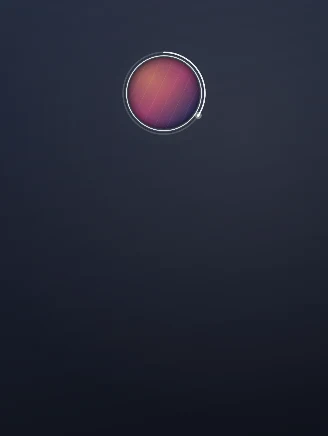 Podcast BadgeA small badge with a progress ring that never covers a face.
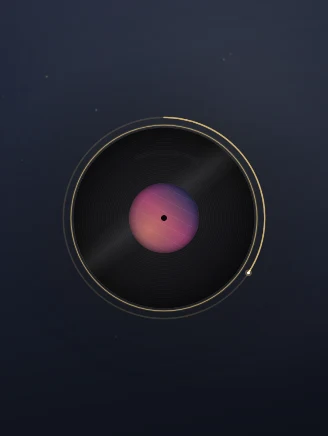 VinylA spinning record with the artwork as the label.
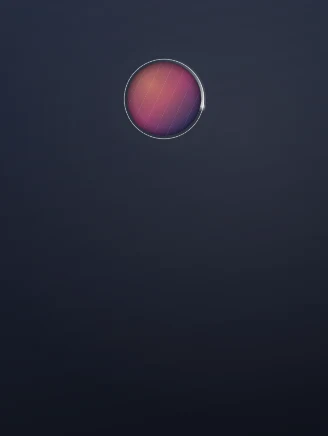 HaloOne slow light travelling a thin ring. Calm enough for an interview.
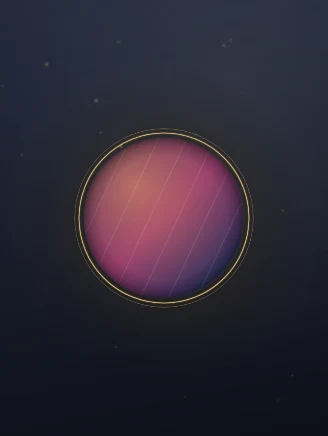 Gold LuxeA warm gold ring with a slow glow.
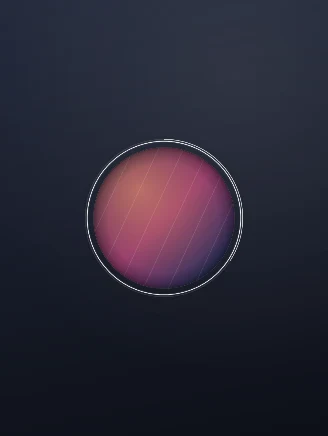 Minimal RingA thin ring and your mark. Clean enough for anything.
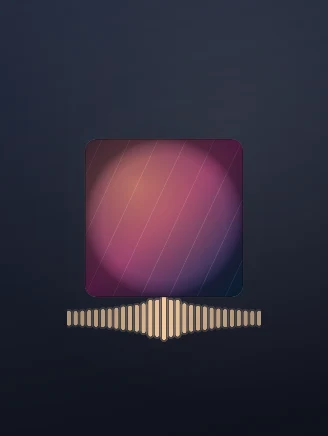 Album CardSquare artwork with a bar row underneath, like a player.
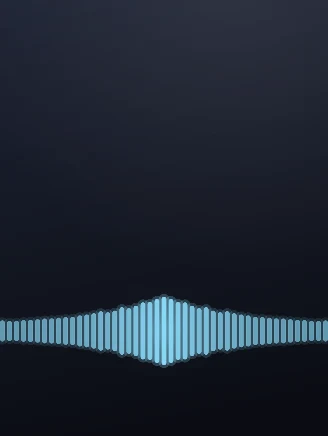 Waveform StripFull width bars along the bottom, so the footage stays clear.
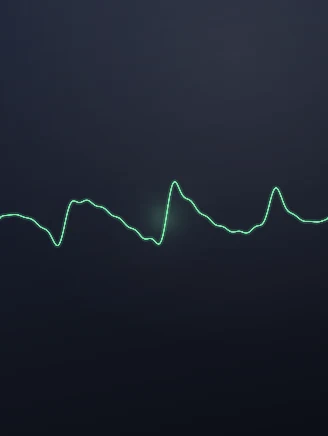 OscilloscopeA single line that moves with the sound. Nothing else.
This is the part almost no visualizer tool does. The free ones online will give you a spectrum and a cover, and then you are on your own for the words.
thewordslandastheyaresung
The audio is transcribed and every word gets its own start and end time, so the line arrives as it is sung and the current word lights up: the karaoke style people recognise from Shorts and Reels. Switch the style, change the font, move the line, set the accent colour to match your artwork.
The script stays editable, and on music that matters more than it does on speech. A transcriber hears a clear vocal well and a processed one, a fast rap or a mumbled hook less well. So the honest workflow is to let it do the first pass in seconds, then fix the handful of words it got wrong. Still far quicker than typing and timing every line yourself.
More than a million people have watched a single After Effects tutorial on building an audio spectrum visualizer. That is not curiosity. That is a lot of people who wanted this look badly enough to sit through an hour of somebody else's timeline.
| Route | What it needs | Lyrics on screen | Time to first video |
|---|---|---|---|
| Vid2Shorts | A browser | Yes, word by word, editable | Minutes |
| After Effects template | A subscription, the template, often paid plugins | Not included, you animate them | Hours, plus the learning |
| Avee Player templates | An Android phone, a template file to import | No | An evening of fiddling |
| Standalone visualizer sites | A browser | Almost never | Minutes, then you still need an editor |
To be fair about the last row: several browser visualizers are genuinely free and some export with no watermark at all. If a bare spectrum video is the whole job, they will do it. The reason to be here instead is that the words, the vertical framing and the finished Short come out of the same page.
A release needs something to upload. Cover art in the middle, the title on the card, the hook captioned. Exported vertical for the teaser and wide for the full upload, in one session.
The visualizer is the whole product for these channels and volume is the job. Nation Pulse and Ember were drawn for exactly this. Set your colour once, keep it on every upload.
A beat seller uploading several a week cannot spend an hour each in a timeline. Swap the artwork, swap the title, export. The preset stays where you left it.
The audiogram, done in the tool that also cuts your clips. Podcast Badge keeps a small mark and a progress ring in the corner while the captions carry the quote.
There is no model deciding what your song feels like. There is arithmetic, and it is worth knowing which arithmetic, because it tells you what the thing will do on your track.
Low band energy, tracked frame by frame and shaped with an attack and a release. The emblem snaps out on the kick and settles instead of flickering.
The moments a new hit begins, found separately from the bass level. Shockwaves, sparks and comet pushes fire on these, which is why they land on the beat.
The frequency spread drives the rings and bars, so a track heavy in the low mids looks different from a bright one. That difference is real, not decoration.
The vocal is transcribed with a time on every word, and the captions are drawn from those times. That is what puts the highlight on the right syllable.
Paste a link to the song, or open the Studio with a clip you already have. Everything else is measured from this audio.
Fourteen presets in the picker. Drop your artwork or logo in the middle, drag it where you want it, set the size and how hard it reacts.
Captions come from the audio with word level timing. Switch the style, then fix any word the transcriber misheard.
Choose 9:16, 1:1 or 16:9 and export an mp4. Nothing is rendered until you press the button, so you can keep changing your mind for free.
Stated plainly, because the thing people hate most in this category is discovering the limit after they have done the work.
Every preset is available on the free plan. The paid one removes the watermark and the daily limit rather than unlocking the good styles, because a picker full of padlocks is a bad way to find out whether a tool suits you. Full detail on the pricing page.
Pick a preset, drop in your artwork, let the words follow the vocal. The first one is free and there is no account needed to see what it looks like.